
3 dead after partial residential building collapse in north China’s Shijiazhuang 习近平对西藏日喀则市吉隆县遭受泥石流灾害作出重要指示
爱情公寓4
Can US afford cost of clean-energy protectionism in race for AI capabilities?_我的网站

A | AI摘要 8月15日,“全闽乐购 国补下乡”活动在台商投资区举行,融合生态休闲与惠民政策,让“国补”红利直达百姓。
Recent media reports have questioned whether a natural gas plant built to power an Amazon data center project in Texas could become the largest climate polluter in the US. The controversy, whatever the eventual outcome, offers a reality check for America's artificial intelligence (AI) drive.
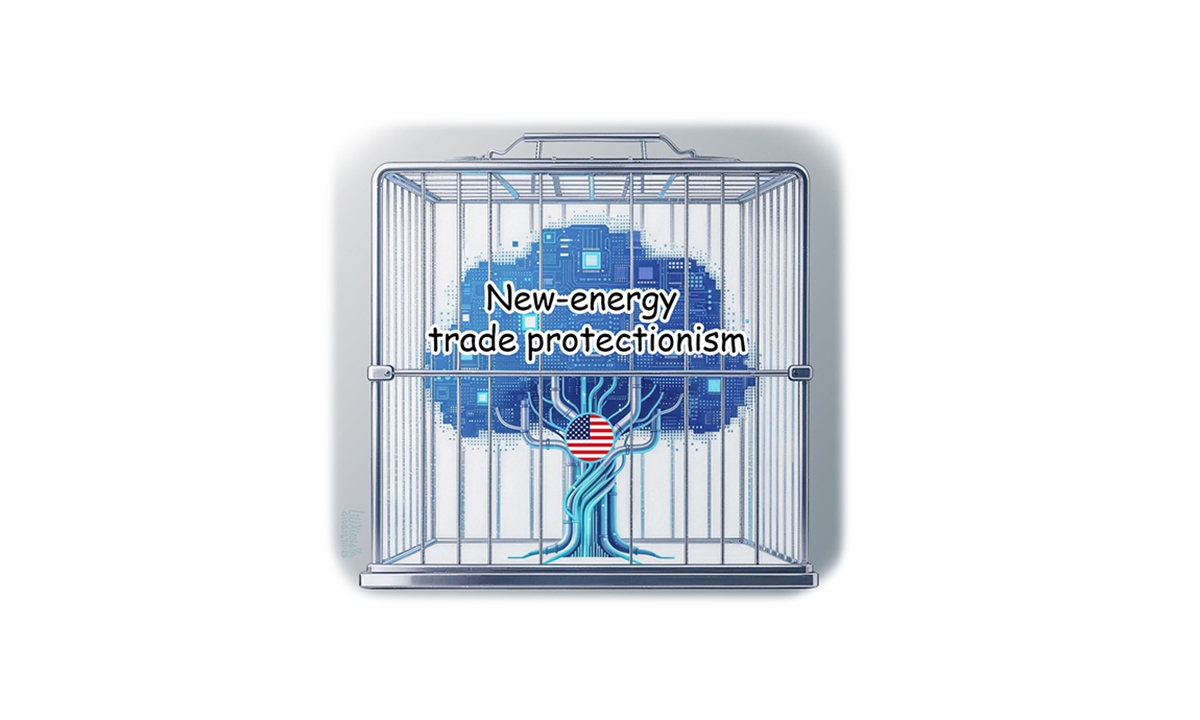
It exposes a growing contradiction: The US is racing to expand its AI capabilities, yet its protectionist trade policies are making it harder and more costly to access some of the clean-energy technologies needed to sustain that expansion. This raises a broader question: Can an energy-intensive AI race afford the costs of renewable energy protectionism?
The US is entering a new era of rising electricity demand. Data centers, the backbone of the AI economy, are emerging as one of the fastest-growing sources of power consumption. Much of that demand is still being met by fossil fuels: The International Energy Agency reports that natural gas supplies more than 40 percent of the electricity used by data centers in the US, making it their largest source of power.
So, it's not surprising that the expansion of data centers has raised concerns over their environmental impact and the pressure they could place on local power systems and electricity bills. A Gallup survey conducted in March found that seven in 10 Americans opposed the construction of AI data centers in their local area, including 48 percent who strongly opposed such projects.
The findings point to a broader challenge for the US: The race to develop AI is increasingly becoming a race to meet growing energy needs. Addressing this challenge will require more than advances in computing technology; it will also depend on an energy system capable of delivering large amounts of reliable, affordable and cleaner power. That, in turn, will require faster development and broader deployment of clean-energy technologies, from solar power to energy storage.
Yet in the clean-energy sector, the US has increasingly relied on protectionist trade measures that limit access to cost-competitive products from global markets. The country has placed greater emphasis on expanding domestic manufacturing capacity, but rebuilding entire clean-energy supply chains at home is a costly and time-consuming process. Even if expanded domestic production is achieved, it is likely to come at a higher cost, making the deployment of renewable technologies more expensive and potentially slower.
The solar industry offers a clear illustration of this policy direction. The US has continued to expand trade barriers in the sector. Reuters reported that the US government announced on Thursday a series of price floors and a 15 percent tariff on products made from polysilicon, a raw material used in solar panels.
The challenge lies in the limited scale of the US polysilicon industry. Reuters reported that the country has two polysilicon factories. Against this backdrop, relying on domestic polysilicon production while restricting access to imports runs counter to the goal of expanding solar power in the US. The country risks creating barriers that ultimately constrain its own access to the global supply chains needed for growth.
The pressing issue for the US is the speed at which new power demand is emerging. The expansion of data centers is creating electricity needs that cannot wait for domestic clean-energy capacity to develop gradually. Global supply chains can provide the scale and speed required in the near term. By narrowing access to these sources, the US risks turning clean-energy policy into a drag on the infrastructure needed for its AI race.
The US has placed AI high on its economic and technological agenda. The outcome of this race will matter greatly, as financial markets are also watching whether America can turn its AI efforts into commercial success.
This leaves the US with a difficult choice: Can it afford the cost of clean-energy protectionism while racing to build AI infrastructure? The answer may be no. Trade barriers that limit access to competitive renewable technologies could ultimately become a constraint on the AI expansion that Washington is seeking to accelerate.
The author is a reporter with the Global Times. [email protected]
。现场设20个摊位及互动体验,吸引众多家庭参与,推动以旧换新政策落地乡村,助力乡村振兴。 8月15日,“全闽乐购 国补下乡”消费品以旧换新下乡村活动在台商投资区花田美事公园举行。活动将生态休闲与惠民政策融合,让“国补”红利借周末出游热潮直达百姓身边。 活动现场,20个摊位一字排开,空调、冰箱、洗衣机、电视、厨卫电器及数码产品等产品品类齐全,一旁的政策咨询台前,工作人员正为村民游客详细解读以旧换新操作流程。现场还设置了迷你足球射门体验和“秋天的第一杯奶茶”温情派送等轻量互动环节,吸引众多亲子家庭和年轻群体参与。

B | 逛展换新之余,还有少儿带来童趣十足的文艺表演,为市民游客奉上一场视听盛宴。 活动由市商务局主办,漳州台商投资区商务局、城市运营集团、石美社区居委会及市家用电器商会协办,市电子商务协会承办。接下来,市商务局将持续以“全闽乐购 国补下乡”活动为抓手,推动以旧换新政策在更多乡镇落地,助力漳州乡村振兴与消费升级。(漳州融媒记者 林依妮 通讯员 蔡玲玲)。
Current article:http://u7z5n.guaxiazaopinduan.cfd/8fcr1ry/xcy.html
Published on:00:00:00