腾讯视频
Rise of AI performers triggers concerns about human actors_我的网站

A | 讯 近日,市场监管总局批准发布《社会化陪同就医服务 基本要求》国家标准(GB/T 47801—2026)。该标准针对当前陪同就医服务边界模糊、服务质量参差不齐等问题,建立了涵盖服务提供者、服务用品、服务平台、服务人员、服务内容、服务流程、服务评价与改进等方面的服务框架。 明确服务提供者总体要求。标准重点从人力资源管理、信息管理、安全管理、合同与收费管理等方面,对服务提供者作出系统规定,提出服务人员培训、服务用品配备、服务对象敏感信息保护、风险评估与应急预案等要求。
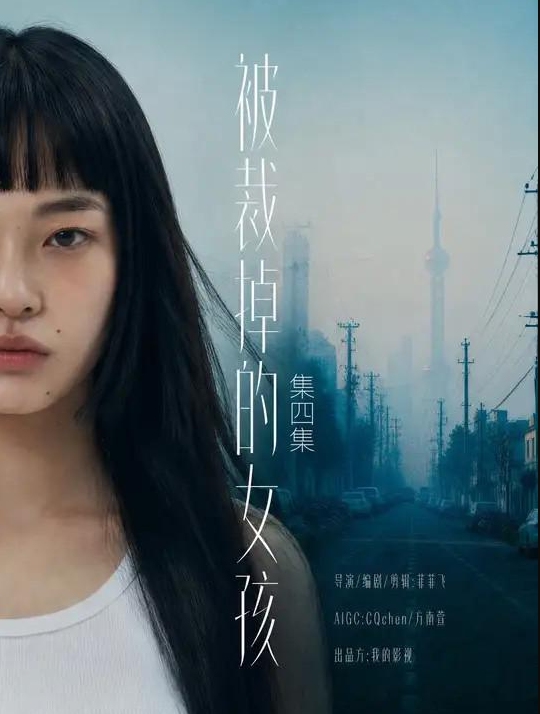
The Girl Who Was FiredA virtual AI actress has gathered massive followers and stirred widespread heated debate on Chinese social media - unlike conventional celebrities, this breakout star is entirely artificially generated.
Fang Taozi, an AI-generated character who stars in the hit AI short drama series The Girl Who Was Fired, has posted lifestyle vlogs, launched social media accounts, shared her breakfasts, workouts and pets, landed brand deals and has a fanbase.
Since the drama debuted on short video platform Douyin on June 12, it has accumulated 200 million views. Fang's Douyin account has attracted more than 400,000 followers.
Fans interact with her as if she were a real celebrity, creating fan edits, discussing fictional relationships and building a community around her imagined life.
This raises a question that has become increasingly urgent for the entertainment industry: Does Fang Taozi represent the first generation of AI celebrities? The answer depends on how "celebrity" is defined, said Zhang Peng, a cultural researcher and associate professor at Nanjing Normal University, in an interview.
If celebrity status is measured by public attention, emotional connection and commercial value, Fang appears to meet many of the criteria. She has fans, a personal brand and even advertising opportunities.
Whether AI can truly become stars depends not on the technology itself, but on their ability to forge genuine emotional connections with audiences and sustain their appeal over time, added Zhang.
However, Shi Wenxue, a Beijing-based cultural critic, argues that AI stars have indeed emerged, but they should be viewed as part of the broader lineage of virtual idols.
From the 1958 US virtual musical group Alvin and the Chipmunks to Hatsune Miku, Luo Tianyi and the hyper-realistic digital human Liu Yexi, virtual performers have existed in various forms for decades.
From the perspective of how she is created, Fang Taozi represents a technological advance. Her emergence is largely a product of the current economic environment of the film and television industry.
The rise of AI performers has also triggered concerns among human actors, especially those working in smaller productions.
Human performers bring personal experience, emotional interpretation and unpredictability - qualities that remain difficult to reproduce. But for industries that require large volumes of affordable content, AI characters offer obvious advantages: They do not age, can work continuously and can be customized for different audiences.
AI short dramas are cheaper, faster and free from the risks associated with human performers, raising concerns over the future of lower-level entertainment jobs in areas such as short dramas, advertising, background acting and voice work, said Zhang.
In Shi's view, beneath the debate lies a familiar tension: technological efficiency versus the threat of displacement for human workers.
The question is not whether AI will completely replace actors, but which parts of acting and entertainment can be automated, he noted.
Rather than presenting an AI figure only as a digital image, Chinese platforms appear to be building complete entertainment ecosystems around AI characters, including dramas, social accounts, fan interactions and commercial partnerships.
China's AI stars have grown out of the audience's desire for emotional companionship, while Hollywood's AI experiments have been shaped by industry battles over efficiency and costs, noted Zhang.
According to Shi, Fang Taozi's sudden popularity is, in many ways, a reflection of audience psychology. Whether they are moviegoers, fans or casual viewers, audiences have grown weary of formulaic content, scripted fan service, predictable performances and fragile celebrity personas. An idol like Fang Taozi offers an alternative: She cannot be involved in scandals, play diva or break character, and her persona can be adjusted to meet audience demands. But the model also comes with risks, particularly the limitations of its creators and the potential for excessive commercialization.
。 划分陪同就医服务边界。

B | 以《中华人民共和国消费者权益保护法》等法律法规为依据,标准提出陪同就医服务人员可以提供诊疗向导、代替排队、领取药品、陪伴交流等服务,但不能提供涉及检查结果判读、提供医疗建议、代为选择或同意治疗方案等服务。 规范陪同就医服务流程。将服务流程划分为服务信息提供、委托与受理、服务交付三个阶段,对信息公示、需求评估、合同订立、服务执行与收尾等关键节点提出要求。同时,要求建立服务评价与投诉管理机制,持续提升服务质量。版权申明:凡注有“”或电头为“”的稿件,均为独家版权所有,未经许可不得转载或镜像;授权转载必须注明来源为“”,并保留“”的电头。 。
Current article:http://u7z5n.guaxiazaopinduan.cfd/v6rcr5c/20260826/4334.html
Published on:00:00:00

 Australian prime minister announces China visit hours before leaving for US to meet Biden
 “超级买家+超级卖家” 中国与世界双向奔赴,“超级买家+超级卖家” 中国与世界双向奔赴
 十三届抚顺市委第七轮巡察完成反馈
 涉霍尔木兹海峡,伊朗议会批准了
 清理浅海区碎石
 Robots widely used in everyday life in Beijing, from brewing coffee to cooking meals
查看所有0条评论>>